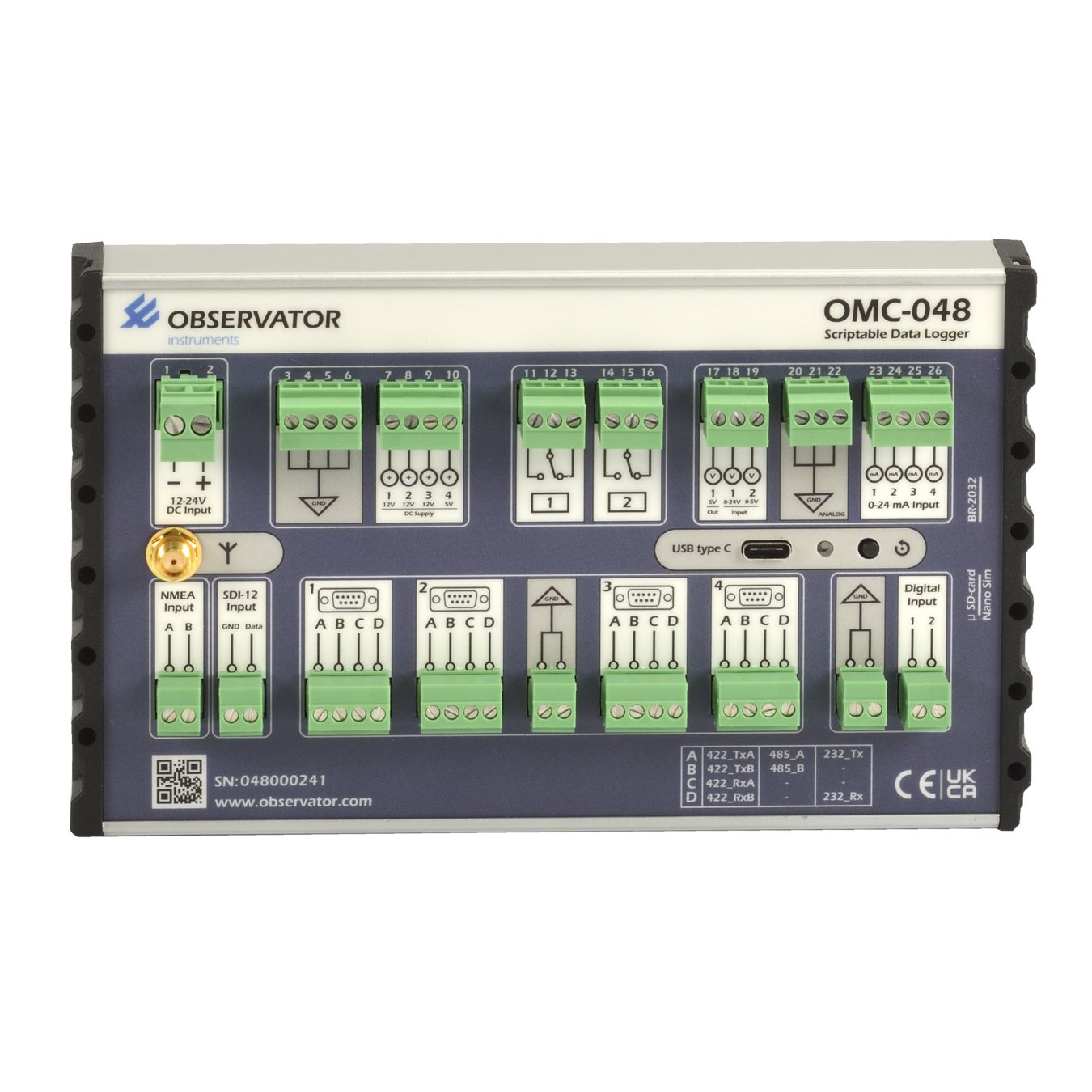
This versatile data logger is the successor of the successful OMC-045-3 data logger. It offers a large number of inputs and outputs, including SDI-12, RS232/422/485, ModBus and analog. The OMC-048 uses the latest technology and includes a powerful processor, as well as a state-of-the-art 4G LTE-M and NB1 (NB-IoT) worldwide modem with a GPRS fallback, establishing a connection to the cellular network.
The OMC-048 uses secure communication (TLS) in order to connect to the cloud. Separate servers can be used for data transfer and remote configuration.
Thanks to the availability of a large collection of input and output drivers, it is possible to configure the logger for many sensors and other peripherals, by simply editing a small text file. No programming needed. However, users with programming experience can modify the existing code or add their own Python code.
The logger is widely used in meteorological and hydrological stations, including data buoys like the OMC-7006. In fact, the logger can be used for all kinds of monitoring applications.
OMC-048 scriptable data logger in combination with:
The OMC-048 is a versatile, fully configurable data logger from Observator, featuring a built-in modem. Thanks to its built-in Python support, the logger can be fully customised for specific measurement and logging tasks.
The OMC-048 distinguishes itself through its programmable functionality (using Python), flexible I/O configuration, IoT-optimised modem, and robust, industrial design. This makes it suitable for complex, custom measurement applications in locations without WiFi or LAN.
Thanks to the large number of available drivers, configuration usually suffices with a simple text file. For additional flexibility, sensor-specific tables in existing drivers (in Python) can also be modified. For ultimate flexibility, drivers can be modified by the user or newly added.
The OMC-048 has four bidirectional serial ports for RS232, RS422, or RS485, plus an RS232/422 input. These ports support ModBus, NMEA, generic text formats, and even binary formats. The logger also features an SDI-12 port, various analog inputs (including 4-20 mA), and two digital inputs.
The OMC-048 is designed for installation in a suitable outdoor enclosure. This could be an (existing) street cabinet, for example, or a waterproof compartment in a buoy. A simple plastic box on a pole will also suffice.
The OMC-048 supports multiple communication protocols, including LTE-M and NB-IoT for mobile networks. Serial communication via RS-232 or RS-485 to, for example, a SCADA system or a satellite modem is also possible.
The logger is used in meteorological, hydrological, maritime, and other environmental monitoring applications. Its programmability makes it adaptable to a wide variety of sensors and protocols.
Sensors are often connected to measure water quality or quantity. These include pressure, temperature, conductivity, water level, dissolved oxygen, pH, chlorophyll, blue-green algae, ammonia, nitrate, and phosphate. More complex multi-parameter probes or multispectral absorption sensors from various manufacturers can also be connected. Virtually all sensors using one of the supported interfaces can be connected.
Yes. The logger has four controllable power outputs for powering sensors, wipers, and similar devices. The logger also has two relays with changeover contacts.
Detailed specifications, manuals and downloadable datasheets are available on the product page.
| OMC-048 | OMC-044 | |
|---|---|---|
| Input ports | ||
| RS232 | Yes | Yes |
| ModBus | Yes | Yes |
| SDI-12 | Yes | Yes |
| NMEA | Yes | Yes |
| Multiple (independent) serial ports | Yes | No |
| Generic ASCII | Yes | Yes |
| Analog Voltage | Yes | Yes |
| Analog Current (4-20mA) | Yes | Yes |
| Output ports | ||
| RS232 | Yes | No |
| NMEA | Yes | No |
| Generic ASCII | Yes | No |
| Relays | Yes | No |
| Multiple output (sensor) power | Yes | No |
| One output (sensor) power | Yes | Yes |
| Modem | ||
| GPRS | Yes | No |
| LTE-M | Yes | Yes |
| NB-IoT | Yes | Yes |
| Optional external Iridium modem | Yes | Yes |
| Protocols | ||
| TCP (TLS) | Yes | Yes |
| FTP | Yes | Yes |
| MQTT | Yes | Yes |
| HTTP(S) | Yes | Yes |
| Configuration connections | ||
| USB | Yes | Yes |
| WiFi | No | No |
| Bluetooth | No | No |
| Remote configuration | Yes | Yes |
| Display and keyboard | No | No |
| Configuration methods | ||
| Command line (menu) interface | Yes | Yes |
| Configuration (text) file | Yes | No |
| Customisatisation tables | Yes | No |
| Write you own Python driver | Yes | No |
| Support for third party sensors | Yes | Yes |
| Power | ||
| Internal battery possible | No | Yes |
| External 12-24 V possible | Yes | Yes |
| Low power (suitable for battery, solar) | Yes | Yes |
| General | ||
| Housing suitable for outdoor usage | No | Yes |
| Optional outdoor housing | Yes | N/a |
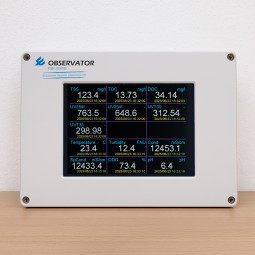
| Optional parameter display | Yes | Yes |
By continuing to use the site, you agree to the use of cookies. more information
The cookie settings on this website are set to "allow cookies" to give you the best browsing experience possible. If you continue to use this website without changing your cookie settings or you click "Accept" below then you are consenting to this.